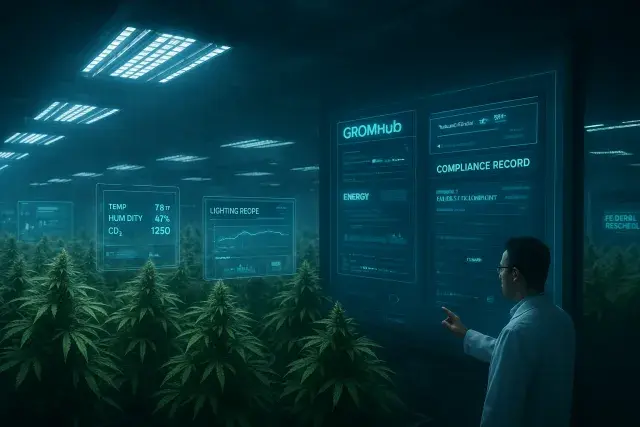
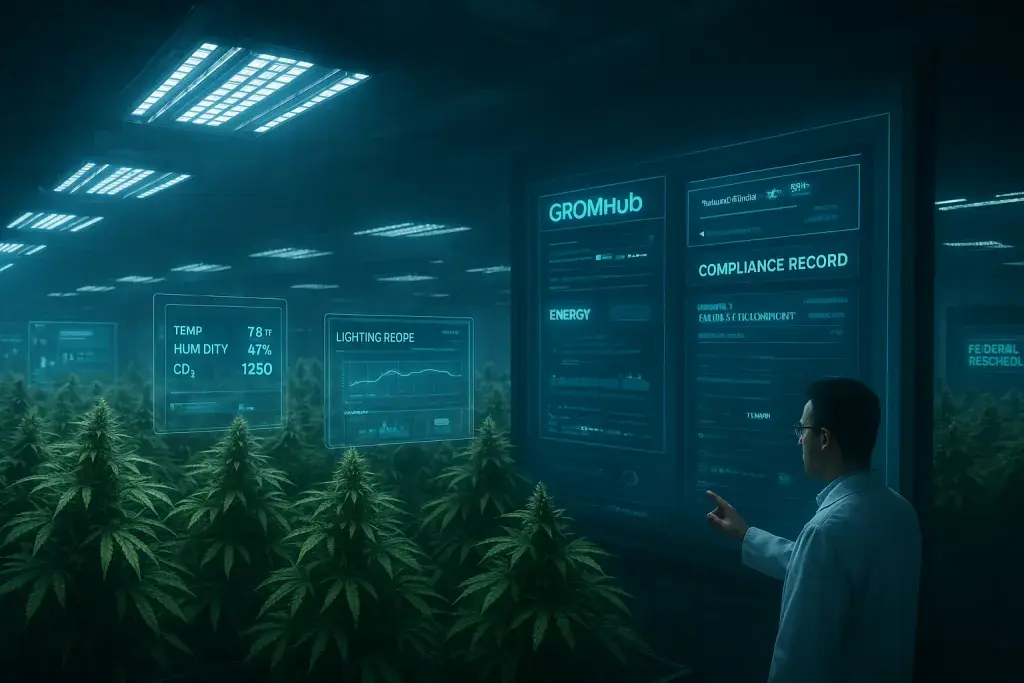
TSRgrow is rolling out a significantly expanded version of GROWHub, its cultivation software platform, adding energy monitoring, expanded batch-record tools, Metrc integration and building management system connectivity ahead of 2026. The update pushes GROWHub well past its original role as lighting-control software and into something closer to an operations hub for commercial grow facilities. For multi-state operators juggling cultivation, compliance and facility management across separate systems, that consolidation matters more than it might sound at first.
Here's the underlying problem TSRgrow is trying to solve: cultivation teams generate mountains of data - lighting recipes, environmental readings, energy draw, batch histories - but that data typically lives in disconnected tools. One system runs the lights. Another tracks the room. A spreadsheet somewhere holds the batch notes. And compliance reporting into Metrc happens as a separate, often manual, exercise. That fragmentation isn't unlike what dispensary operators dealt with before retail software matured; a modern point of sale system for cbd virginia retailers use today consolidates sales, inventory and compliance reporting in one place for largely the same reason cultivators now want it upstream, at the grow level.
Batch records meet track-and-trace
The expanded batch-record functionality lets operators organize cultivation settings, environmental conditions and operational data around individual crop cycles. Layered with direct Metrc integration, that means the same system generating grow data can also feed regulatory track-and-trace requirements without a separate manual entry step. For compliance teams, that's not a small thing. Audit readiness in cannabis cultivation often comes down to whether records are complete, timestamped and traceable back to a specific batch - not reconstructed after the fact from someone's notes.
Regulatory scrutiny in cultivation isn't going away, and with talk of federal rescheduling still circulating, operators are bracing for compliance expectations to tighten rather than loosen. A platform that documents cultivation conditions as they happen, rather than after harvest, gives operators a stronger paper trail if a regulator or auditor comes asking.
Energy data enters the conversation
Energy monitoring is the other notable addition. Indoor cultivation is an energy-intensive business - lighting alone can represent a substantial share of a facility's utility bill - and until now, most cultivators have tracked energy consumption separately from grow performance. GROWHub's connection to TSRgrow's Remote Power infrastructure lets operators view lighting energy use alongside cultivation and environmental data in the same dashboard. That pairing makes it possible to ask sharper operational questions: did a particular lighting recipe boost yield enough to justify its energy draw? Expanded BMS connectivity extends that logic further, letting GROWHub talk to broader facility systems instead of forcing operators to stitch information together across platforms that don't communicate.
What this signals for cultivation operators
None of this changes federal cannabis law, and it doesn't reduce the underlying compliance burden state programs impose. What it does is give cultivation teams a more defensible, better-documented record of how a crop was actually grown - useful for internal quality control, useful for regulators, and arguably useful for investors evaluating operational discipline at a facility. Software consolidation of this kind is a familiar pattern across regulated cannabis businesses: retail did it with POS and seed-to-sale integration years ago, and cultivation is now catching up.