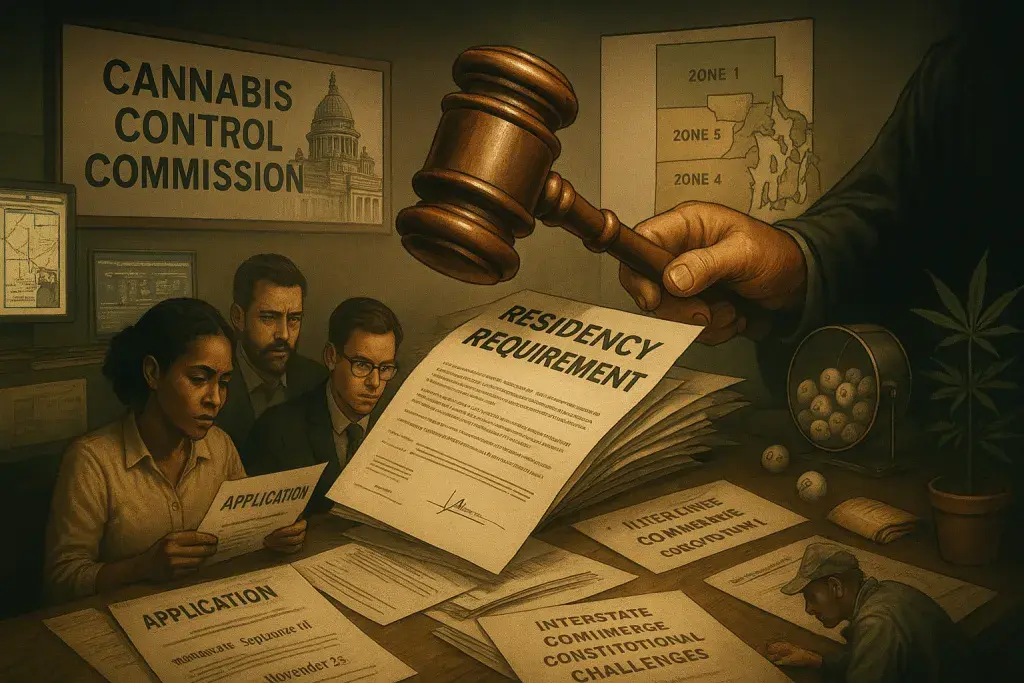
Rhode Island's retail cannabis licensing process is back underway, months after a federal court ruling scrapped every pending application and social equity certification tied to the state's residency requirement. The General Assembly has since rewritten the offending provisions, and the Cannabis Control Commission is running the process again from close to scratch. For operators who spent 2024 and part of 2025 holding leases and building compliance files, the restart is welcome - and also, frankly, a little maddening.
Here's the mechanism at play: federal judges in multiple jurisdictions had already found that requiring at least one applicant to live in-state violated constitutional protections around interstate commerce, and Rhode Island's version was no exception. Judge Melissa DuBose didn't mince words when she called the fallout "self-inflicted," pointing to the Commission's decision to press ahead with licensing despite the residency issue being a known liability elsewhere. That's a pointed rebuke for a regulatory body, and it puts new pressure on the Commission to get this second attempt right. Multi-state operators and single-location applicants alike will want to watch how the state handles zoning verification and real estate documentation this time, since the practical mechanics of running a compliant storefront - from point-of-sale systems to seed-to-sale tracking through METRC - don't change just because the license process restarted. Some applicants have already begun comparing back-office options, including a cannabis retail platform for Oregon that several multi-state groups use as a reference point for inventory and compliance workflows when building out new markets. cannabis retail platform for Oregon
Deadlines and What Changed in the Law
Social equity certifications are due September 11. Retail applications close November 23. Beyond removing the residency mandate itself, lawmakers also stripped out several implicit residency requirements buried in the social equity application criteria - the kind of quieter provisions that can still exclude out-of-state investors or operators even after the headline requirement is gone. The legislature gave the Commission 60 days from the bill's passage to reopen certifications and stand up a new application process, which is the timeline now playing out.
The Lottery, the Zones, and Who Gets Left Out
Licenses will still be awarded through a lottery among qualified applicants - meaning real estate secured, zoning confirmed, paperwork clean. The state has 24 licenses available across six zones, split between social equity, worker cooperative, and general retail categories. The canceled lottery was only going to award 20 of those, because Zone 1 (the northern part of the state) and Zone 4 (East Greenwich, North Kingstown, Cranston, Warwick) didn't draw enough applicants the first time. Whether that changes this round is an open question. It's a fair complaint from longtime applicants: brand-new groups can now enter the pool without having carried lease payments for years the way earlier applicants have, and everyone can now see exactly who applied where, which strips away whatever competitive privacy existed before.
Market Pressure on Cultivators and Existing Dispensaries
Before the derailment, the Commission had floated slowing licensing further, worried that adding dispensaries too quickly would trigger price compression among the state's nine operating stores. That concern hasn't gone away, but it's colliding with a rougher reality upstream: Rhode Island's 55 licensed cultivators - down from 58 earlier this year, after OP Pharm's merger into vertically integrated compassion center New Leaf and Blackstone Valley Group's decision not to renew - are struggling for retail buyers. Six of the nine existing dispensaries are partially or fully vertically integrated, growing their own product and needing less wholesale supply from independent cultivators. That imbalance, more retail-starved growers than dispensary shelf space, is the real supply chain story underneath the licensing fight, and it's one regulators will need to weigh against fears of oversaturation as new stores eventually open.