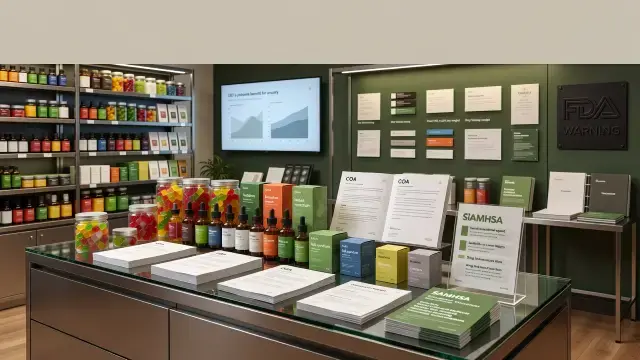
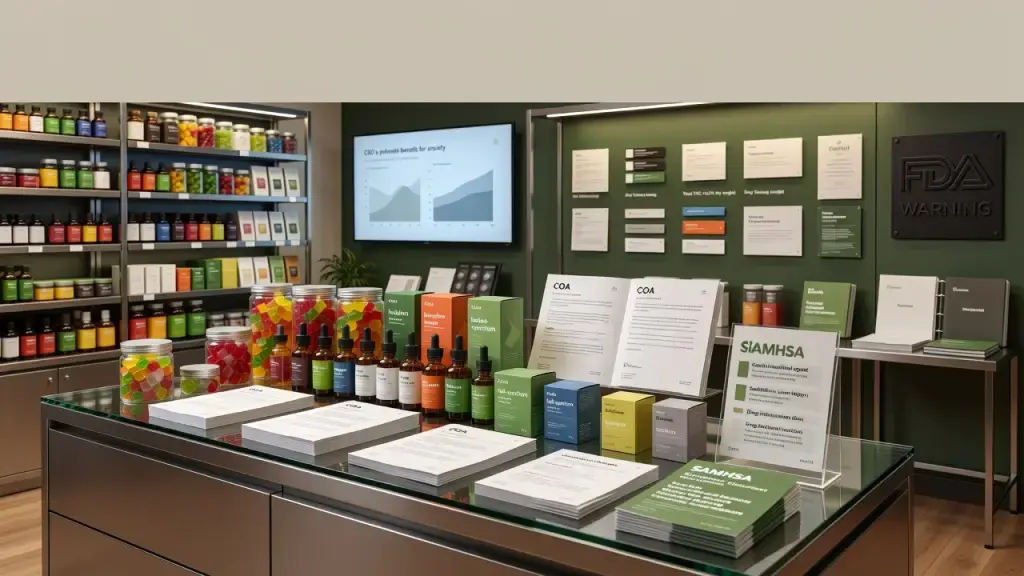
Retail CBD aimed at anxiety and stress support has become one of the most crowded shelf categories in the cannabinoid business, spanning gummies, oils and tinctures sold in dispensaries, pharmacies and online marketplaces alike. The catch is that this growth has outpaced regulatory clarity. The FDA still does not approve or routinely test these products for potency or purity, which leaves quality control largely in the hands of manufacturers and third-party labs - and that gap matters a great deal to anyone selling or recommending these products.
Why Labeling Accuracy Is a Real Compliance Problem
A 2017 study published in JAMA Network examined 84 independently tested retail CBD products and found that 26% contained less CBD than the label claimed, while 43% contained more. For a dispensary buyer or a brand building wholesale relationships, that kind of label inconsistency is not a minor technicality. It's a liability exposure, a consumer-trust problem and, depending on the jurisdiction, a potential violation of state labeling statutes governing supplements and hemp-derived goods. Retailers sourcing CBD for anxiety-support marketing need to treat certificate of analysis (COA) documentation as a baseline requirement, not an optional nicety.
What the Research Actually Supports - and What It Doesn't
Clinical evidence for CBD as a standalone anxiety treatment remains thin. Many existing studies are small, and some investigate delta-9 THC at concentrations well above the 0.3% dry-weight threshold permitted in retail hemp products under the 2018 Farm Bill. Gerry McNally, Ph.D., vice president of research and development at NextEvo Naturals, notes that a good number of small clinical studies have looked at CBD across various anxiety disorders, and while results are sometimes contradictory, the overall signal leans toward potential benefit. That's a meaningfully different claim than "CBD treats anxiety," and retailers, marketers and brand teams should be careful not to blur that line in product copy or point-of-sale signage - doing so invites scrutiny from the FTC and state consumer-protection regulators alike.
Operational Considerations for Retailers and Brands
For dispensary operators and CBD-focused retailers, several operational factors separate a defensible product line from a liability:
- Verifiable COAs tied to specific batches, not generic or outdated documentation
- Clear differentiation between isolate, broad-spectrum and full-spectrum formulations at the SKU level
- Dosage guidance on packaging that doesn't imply guaranteed outcomes
- Avoidance of unsupported therapeutic claims in marketing materials, menus or staff training
- Awareness that full-spectrum products carry trace THC, which has implications for drug testing and interstate shipping compliance
In practice, though, many smaller operators still lean on supplier assurances rather than independent verification - a shortcut that can look fine until a batch fails testing or a customer complaint triggers regulatory attention.
Consumer Safety Context Operators Shouldn't Skip
SAMHSA has flagged potential side effects associated with orally administered CBD, including gastrointestinal upset, sedation, mood changes, liver injury markers, reproductive effects and drug interactions. None of that makes CBD inherently dangerous, but it does mean retailers should avoid positioning these products as risk-free wellness items. Staff training, accurate signage and a referral posture toward licensed health care providers - rather than retail staff - for personalized dosing guidance are reasonable baseline practices for any operator carrying this category.