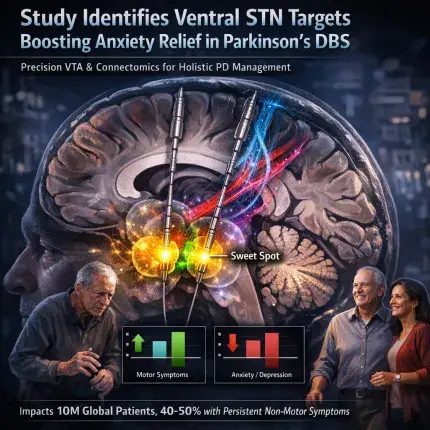
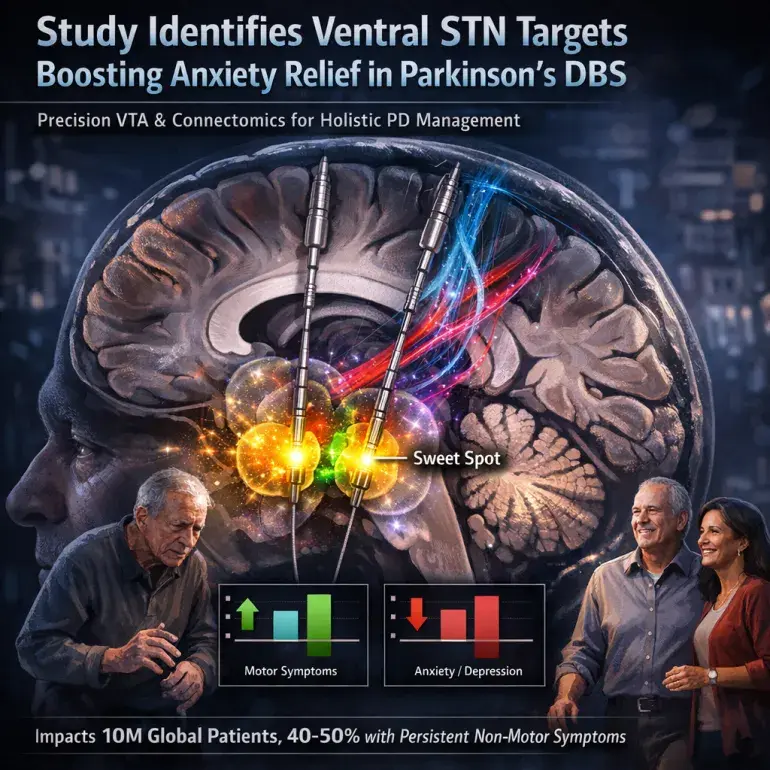
A new retrospective analysis of 56 Parkinson's disease patients undergoing subthalamic nucleus deep brain stimulation (STN-DBS) reveals that stimulating ventral STN regions significantly improves not just motor symptoms but also anxiety and depression. Conducted with advanced imaging tools like Lead-DBS, this research, evaluated six months post-surgery, uncovers precise electrode placements that enhance emotional outcomes, offering hope for more holistic PD management amid rising demand for non-motor symptom therapies.
Key Methods and Clinical Improvements
Researchers reconstructed electrode positions and calculated volumes of tissue activated (VTA) in patients assessed before and after bilateral STN-DBS. Standardized scales measured motor function, quality of life, anxiety, and depression, showing statistically significant postoperative gains across these domains (p 0.05).
- Motor symptoms and quality of life markedly improved, confirming STN-DBS efficacy.
- Anxiety and depression scores dropped notably, especially with ventral STN contacts.
- Right STN limbic VTA positively correlated with anxiety reduction.
Optimal Stimulation Sweet Spots Emerge
Voxel-wise sweet spot analysis highlighted the ventrocentral left STN as a prime target for emotional benefits. Ventral placements outperformed dorsal ones, aligning with the STN's functional subregions: limbic for mood, sensorimotor for movement. This precision addresses PD's complex symptomatology, where non-motor issues like anxiety affect up to 40-50% of patients, often persisting despite medications.
Connectivity Drives Mood Outcomes
Structural connectome mapping linked fiber tracts from STN electrodes to cortical areas with symptom changes. Projections to the prefrontal cortex (PFC) strongly predicted anxiety and depression improvements, while sensorimotor cortex (SMC) connections correlated negatively.
- PFC modulation likely enhances executive function and emotional regulation.
- SMC focus may prioritize motor gains at mood's expense.
- These insights support directional leads for subregion-specific stimulation.
Broader Implications for PD Treatment
STN-DBS now shows promise beyond motors, potentially transforming care for 10 million global PD patients facing debilitating mood disorders that erode quality of life and increase caregiver burden. By refining placements via connectomics, clinicians can personalize therapy, minimizing side effects. Future trials with advanced leads could standardize these ventral targets, integrating into guidelines and accelerating adoption in aging populations where PD prevalence surges.