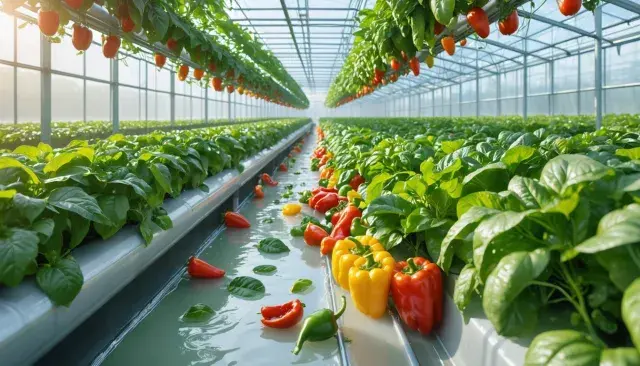
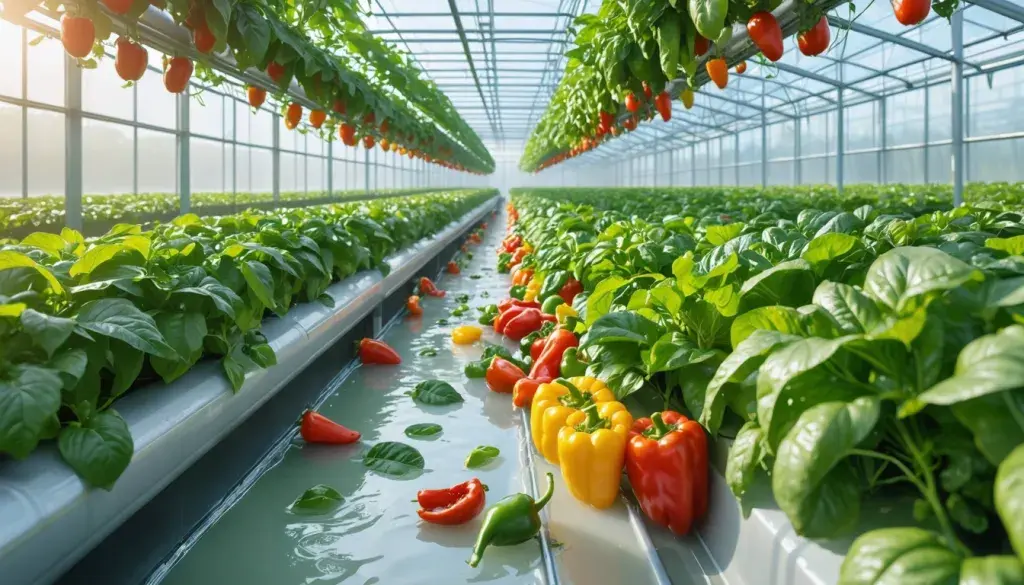
In Ontario, Canada, Fresh Venture Farms has ramped up bell pepper production by an average of 16% over four years, crediting innovative water quality enhancements. This breakthrough matters for sustainable greenhouse farming, slashing costs and chemical use while enabling full water recycling amid growing demands for eco-friendly agriculture.
Innovative Tools Transform Irrigation
Fresh Venture Farms partnered with Ultramins over four years, deploying cavitating ultrasonic USAF™ DT-100 transmitters submerged under orange buoys in ponds and silos. Last year, they added nanobubble technology and routine hydrogen peroxide dosing to the daily supply, ditching other disinfectants entirely.
- Started with pond transmitters, expanded to two for silos and five for daily water.
- H₂O₂ use dropped over 50%, saving $0.10–$0.15 per m² annually.
- Root quality visibly improved, staying healthy through full growing seasons.
Pathogen Control Backed by Hard Data
Florian Locher, the grower, shares A&L Laboratories' DNA sequencing reports confirming the transmitters' efficacy. Pre-treatment samples teemed with Fusarium and Pythium pathogens, now eliminated without synthetic agents. This pathogen-free water supports 100% recycling, a game-changer in hydroponic systems where contaminated irrigation can wipe out crops.
Expert insight: Ultrasonic cavitation disrupts pathogen cell walls at a microscopic level, outperforming traditional chlorination by avoiding harmful residues that stress plants.
Cost Savings and Rapid ROI
The shift cut costs per square meter by 40–50%, with ROI under six months—far quicker than typical ag investments. By 2025, production targets exceed 35 kg per m², amplifying yields sustainably.
- No pathogen issues despite zero synthetics.
- Streamlined operations: "I don't worry about irrigation anymore," says Locher.
- A "no-brainer" for other bell pepper propagators, per Locher.
Broader Push for Sustainable Farming
This success aligns with global trends toward regenerative agriculture, where water stewardship combats climate pressures and regulatory bans on chemicals. In Canada’s greenhouse sector, such tech reduces environmental footprints, boosts food security, and sets benchmarks for scaling clean water solutions worldwide.