A quiet but meaningful shift in state policy is expanding how licensed first responders can access mental health treatment - and several of those changes directly intersect with cannabis law. From Maryland's new workplace protection for medical cannabis patients to Ohio's freshly signed PTSD commission, states are moving away from a one-size-fits-all treatment model for firefighters, police officers, and emergency medical workers who carry the weight of repeated trauma on the job.
The business implications extend into cannabis retail and dispensary operations in ways that aren't immediately obvious. When a state enacts employment protections for registered medical cannabis patients - as Maryland did this year - it changes the compliance calculus for both patients and the dispensaries serving them. Medical cannabis operators in states with similar frameworks need to understand how their patient populations interact with workplace drug testing policies, particularly when employment discrimination protections hinge on the distinction between the presence of cannabis metabolites and actual on-duty impairment. It's a nuanced line, and one that budtenders and patient intake staff may need to understand at a basic level to properly support their customer base. Dispensary technology vendors building tools for markets with robust medical programs - think point-of-sale for Arizona dispensaries, where medical cannabis has a long operational history - have already grappled with how to document patient status and purchase history in ways that satisfy compliance requirements without overreaching.
Maryland's law, which takes effect in October, is specific: it covers registered medical cannabis patients who test positive for cannabis metabolites but are not impaired while on duty. That's a meaningful legal distinction. Metabolites can remain detectable in urine long after any psychoactive effect has passed - a well-established pharmacological reality that has complicated cannabis-friendly workplace policy for years. The law doesn't give first responders blanket protection; it protects lawful off-duty use. In practice, that still leaves open questions around what "impaired while on duty" means in an evidentiary sense, and how employers will document or contest it.
The PTSD Commission Model and What It Signals for Medical Programs
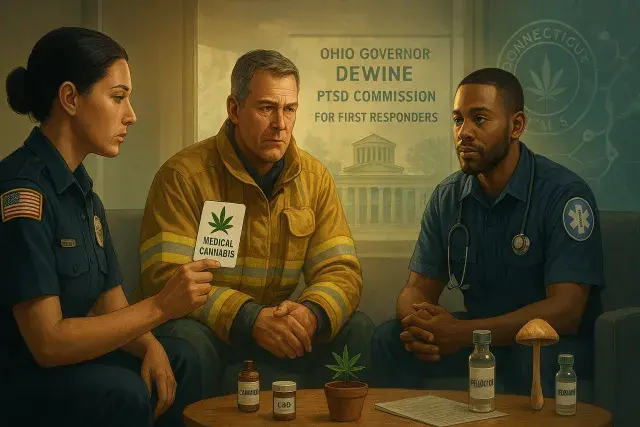
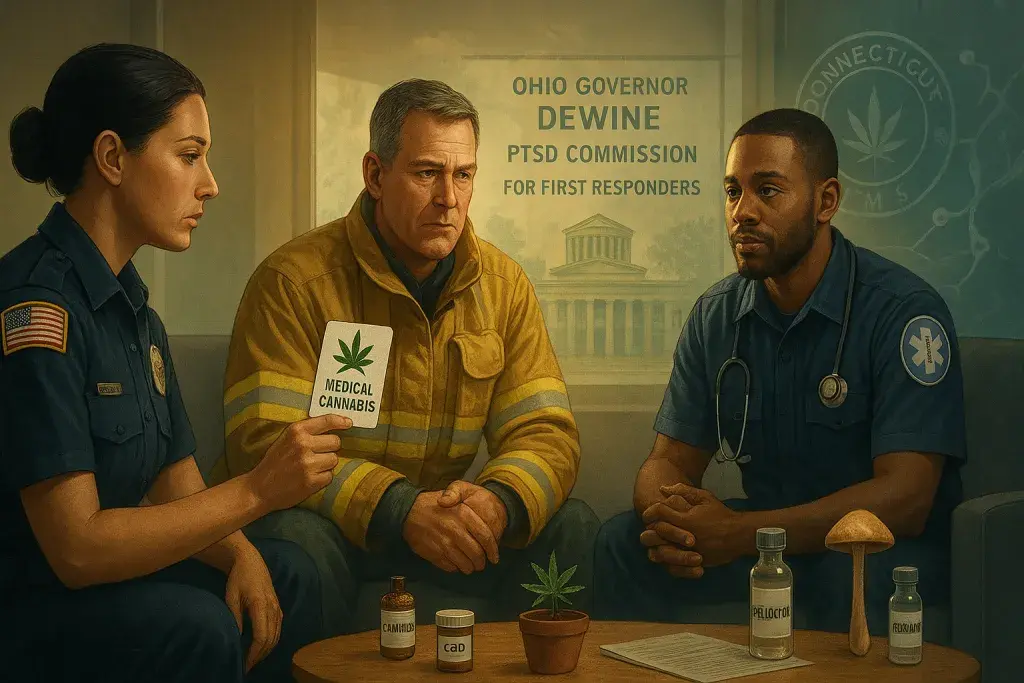
Ohio's approach is structurally different. Republican Gov. Mike DeWine signed legislation creating a Post-Traumatic Stress Injury Commission that will review applications from eligible first responders seeking financial assistance to cover treatment costs. The commission model doesn't mandate any specific treatment pathway - it creates a review and funding mechanism. That design choice matters because it leaves room for covered treatments to evolve as the evidence base changes. Whether that eventually includes cannabis-based therapies or psychedelic-assisted treatment depends on future rulemaking, but the architecture is flexible enough to accommodate them.
As retired Missouri firefighter and paramedic Jason Cerrano put it, cumulative exposure to traumatic events has a normalizing effect over time - "the crazy stuff starts to at least seem normal" - which makes early and ongoing intervention harder to time correctly. That observation points to a structural problem with treatment-on-demand models: by the time a first responder seeks help, the psychological burden may already be significant. Expanded program eligibility, like Connecticut's decision to open its Yale psilocybin-assisted therapy pilot beyond veterans and retired first responders to any eligible state resident 18 or older, reflects a growing recognition that drawing narrow eligibility lines can delay access for people who need it.
Psychedelic Research Bills and the Cannabis Regulatory Parallel
Missouri lawmakers moved a bill this session that would allow veterans and first responders in approved research studies to receive psilocybin and ibogaine under medical supervision. The legislature adjourned in May without sending it to the governor, so it didn't cross the finish line - but its advancement signals where the political appetite is heading. The regulated-access research model mirrors, in structure, some of the early frameworks states used to build medical cannabis programs: supervised clinical settings, defined patient populations, institutional oversight, and a tight approval process before broader access is considered.
For cannabis industry operators and investors, this parallel is worth watching. Psychedelic therapy programs, if they move through state legislatures and into regulated commercial frameworks, will need many of the same operational infrastructure components that medical cannabis markets required - patient registries, compliance documentation, licensed facility requirements, and eventually some form of seed-to-sale or custody-of-substance tracking. The vendors, software developers, and compliance professionals already working in cannabis retail are, in many respects, better positioned than most to serve emerging regulated psychedelic markets if and when they formalize.
What Dispensary Operators Should Actually Take Away
The near-term operational takeaway for cannabis retailers is narrower and more concrete. States that enact employment protections for medical cannabis patients - particularly first responders, who are a meaningful patient segment in many markets - are likely to see those patients engage more openly with dispensaries. That means higher compliance demands around patient verification, purchase record accuracy, and staff training on medical program requirements. It also means the distinction between adult-use and medical cannabis programs matters operationally, not just legally. A dispensary that serves both markets needs intake processes and POS documentation that can distinguish between the two, accurately and consistently.
The thing is, first responder mental health policy and cannabis retail don't look like the same story from the outside. But they're connected by a shared question: how do regulated access frameworks handle the gap between what science is beginning to support and what existing law currently permits? States are answering that question in different ways - and the answers are reshaping patient populations, compliance obligations, and the long-term demand profile for licensed cannabis businesses.