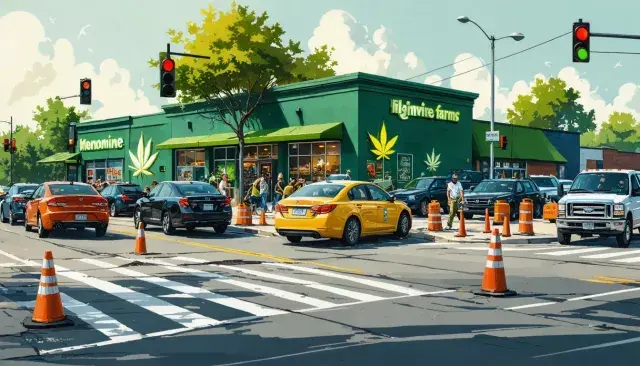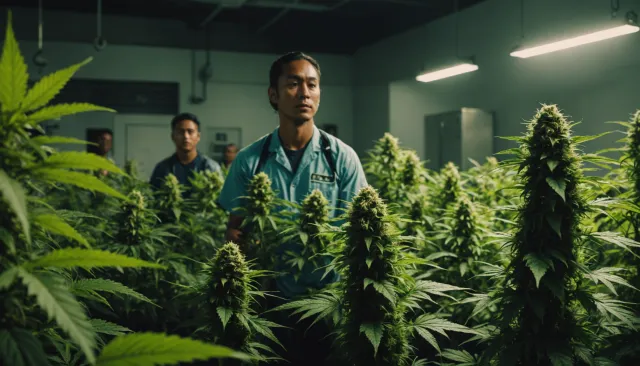
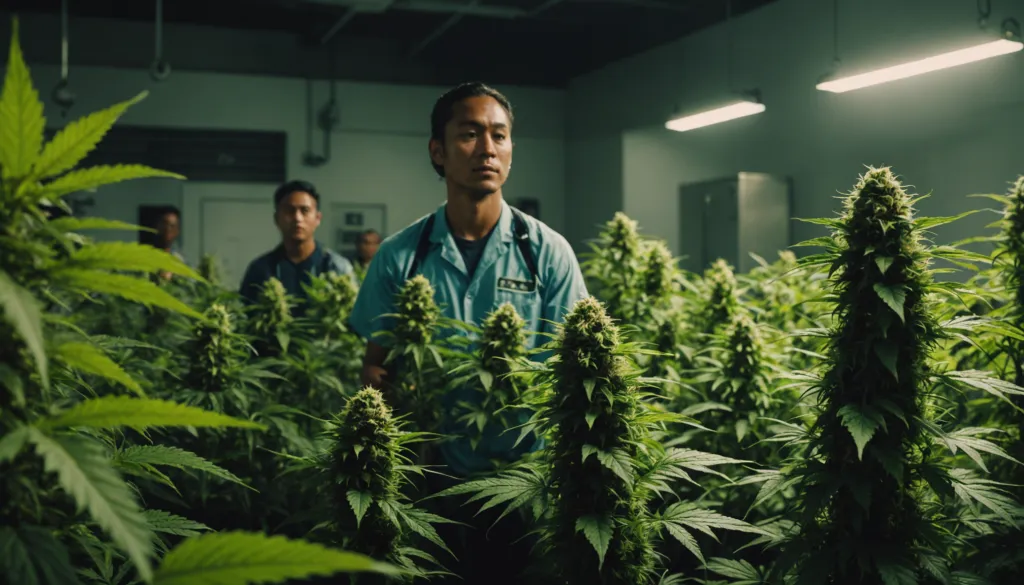
More than seven years after Guam enacted the Cannabis Industry Act of 2019, the territory's Cannabis Control Board has issued its first facility permit to a licensed cannabis operator. Deep Green Guam received unanimous board approval to operate a cultivation facility - a milestone that marks the formal beginning of a regulated cannabis supply chain on the island, though consumers won't see product on shelves anytime soon.
The delay itself is almost a case study in how difficult it is to build a regulated cannabis market from scratch. Rules and regulations weren't finalized until May 2022. Cannabis Identification Card applications didn't open until August of that year. And the full application process runs six distinct steps - each one a potential point of friction for operators trying to plan a business against an uncertain regulatory timeline. For context, dispensary technology providers and compliance platforms that operate in markets with mature licensing frameworks - like IndicaOnline in Michigan - have years of operational data on what a fully licensed adult-use market actually demands of its software, compliance, and inventory infrastructure. Guam is only now beginning to generate that kind of operational baseline.
Here's the catch, though: Deep Green Guam's permit authorizes cultivation, preparation, and packaging only. Per Guam's rules and regulations, the company cannot sell directly to consumers. Before any product moves to market, the territory still needs licensed cannabis retailers and other approved cannabis establishments. That's a supply chain with no downstream yet - a cultivator holding inventory, and nowhere compliant to send it.
What the Licensing Backlog Tells Operators
The current application picture in Guam is thin. Seven active licensing applications remain in process, against eight expired applications and three that have been canceled outright. Those numbers aren't unusual for an emerging market with a multi-step licensing process and years of regulatory uncertainty, but they do signal how many prospective operators either ran out of capital, lost confidence in the timeline, or simply couldn't sustain a pending application through years of administrative limbo. That attrition is a real cost - not just to those businesses, but to the speed at which a functional retail market can materialize.
Regulatory timelines like Guam's put enormous pressure on would-be licensees. Business plans written in 2019 or 2020 bear little resemblance to the financial realities of opening a cannabis facility in 2025 or 2026. Construction costs, lending conditions, and staffing markets have all shifted. For investors and operators in markets like this, the practical lesson is that regulatory approval and operational readiness are two very different clocks - and they rarely run together.
The Lab Testing Waiver: Pragmatic or Premature?
One regulatory decision worth examining closely: Guam has waived mandatory cannabis lab-testing requirements until July 2029. The intent is clearly to reduce barriers for early-stage operators in a market with limited licensed infrastructure. That's understandable. Standing up independent, ISO-accredited cannabis testing laboratories is expensive and time-consuming, and there may simply be no licensed labs in Guam yet capable of issuing compliant Certificates of Analysis.
In practice, though, the waiver creates a consumer safety gap that regulators and operators alike should be thinking about. In mature adult-use markets, lab testing is the foundational compliance mechanism - it confirms potency, screens for pesticides, heavy metals, residual solvents, and microbial contamination, and provides the COA that retailers rely on before product hits dispensary shelves. Without that requirement in force, Guam's early cannabis supply chain will operate without the third-party verification layer that most regulated markets treat as non-negotiable. The waiver gets the market moving. Whether the tradeoff is the right one depends heavily on what interim safety standards, if any, Guam puts in place in the meantime.
Guam in Regional Context
Guam is not the only United States territory to have moved toward adult-use legalization. The Commonwealth of the Northern Mariana Islands enacted its adult-use measure in 2018 - a year before Guam - and the U.S. Virgin Islands followed with its own legalization law in 2023. None of these markets are large by continental U.S. standards, but they matter as regulatory data points. They demonstrate that adult-use legalization can take root in geographically isolated, small-population jurisdictions, and that the operational and compliance challenges of those markets - limited applicant pools, infrastructure gaps, thin licensing pipelines - are distinct from what multi-state operators face in a state like Colorado or Oregon.
For vendors, compliance technology providers, and cannabis business service companies eyeing these markets: the opportunity is real, but the economics are narrow. A territory-scale cannabis market supports a fraction of the license count, transaction volume, and wholesale activity of even a mid-sized U.S. state. The operators who succeed in markets like Guam will likely be those who build lean, compliance-forward operations from day one - because there's little margin for the kind of costly regulatory correction that a larger market can absorb.
Deep Green Guam's permit is a genuine milestone. It's also the beginning of a long road to a functioning retail market - one that still needs licensed retailers, lab infrastructure, and a licensing pipeline that holds together. The permit is issued. The work is just getting started.