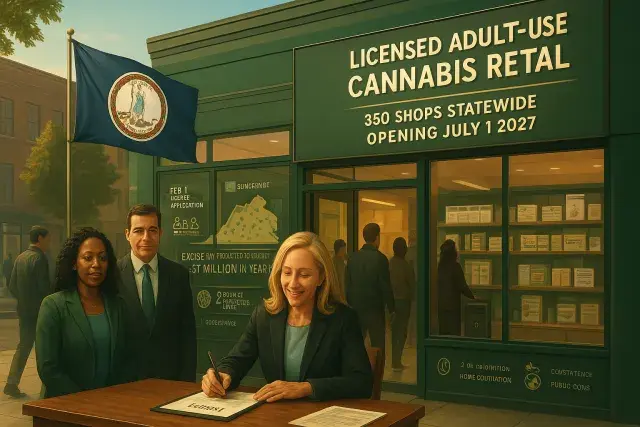
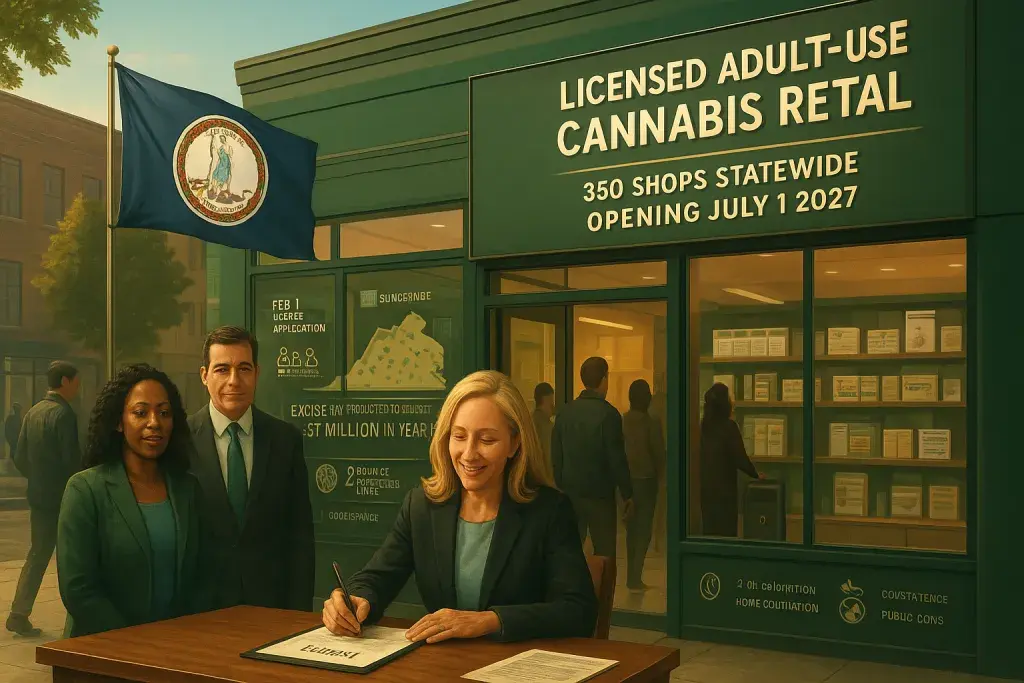
Virginia has become the first Southern state to establish a licensed recreational cannabis retail market, with Gov. Abigail Spanberger signing budget legislation Monday that authorizes up to 350 cannabis shops to open statewide beginning July 1, 2027. Regulators will begin accepting retail license applications on Feb. 1, giving operators, investors, and supply chain vendors roughly two years to prepare. For a state that legalized adult possession back in 2021 without ever finishing the retail framework, this is the resolution to a five-year policy stall - and the starting gun for a new regulated market in a region that has largely kept cannabis commercial sales off the table.
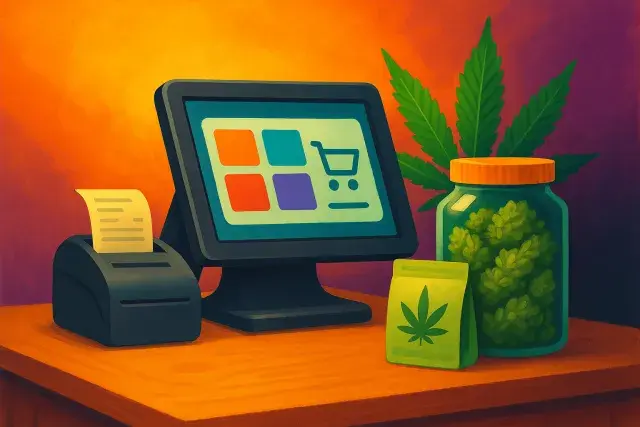
The operational clock starts now. Dispensaries looking to enter Virginia will need to build out their compliance infrastructure well before the first legal sale. That means point-of-sale systems capable of handling adult-use transaction flows, age verification, inventory tracking, and state reporting requirements - all of which regulators typically finalize in the months leading up to a market launch. Vendors already working in multi-state adult-use environments are familiar with this runway; new entrants in Virginia will need to move quickly. Operators researching POS software for Virginia cannabis retailers should be evaluating systems now, before licensing timelines compress their preparation window. Virginia's medical program already set some compliance expectations, but adult-use retail introduces a different volume, a different customer profile, and a different regulatory reporting burden.
The revenue picture is meaningful, if modest at the outset. According to legislative budget documents, the state's excise tax layered on top of its existing sales tax is projected to generate approximately $51 million in the program's first year. That figure gives operators a rough signal about the market's expected early scale - and gives the state a clear interest in keeping the regulated channel price-competitive with illicit alternatives. As state Sen. Lashrecse Aird put it when the compromise was being negotiated: the legal market has to be "affordable and accessible enough to actually compete." That's a real operational constraint. Excise tax structures that push retail prices too far above street prices have undermined regulated markets in other states, and Virginia's policymakers appear to have that tension in mind.
What the Licensing Framework Means for Operators
The 350-store cap is worth paying attention to. License caps create competitive dynamics that don't exist in uncapped markets - they concentrate early-mover advantage and put a premium on the application process itself. Virginia's medical program already has established dispensary operators in the state, and those incumbents will likely have a head start: existing infrastructure, real estate, regulatory relationships, and state-mandated seed-to-sale tracking already in place. New applicants will be entering against that baseline. Equity provisions, which have been part of the Virginia legalization conversation from the beginning given documented racial disparities in enforcement, may shape how the licensing pool is structured - though the specific equity license carve-outs or priority tiers are subject to the rulemaking process that follows.
The possession limit increase - from 1 ounce to 2 ounces for adults - matters for retail operations in a practical way. Higher possession limits generally reduce the friction of a single transaction and may shift consumer purchasing behavior toward larger basket sizes. For dispensary operators thinking about inventory planning, SKU management, and wholesale procurement, that's a variable worth modeling. Home cultivation remains legal under the new law, which means the retail market will coexist with consumer self-supply - a dynamic other adult-use states have managed with mixed results depending on how price and convenience stack up.
Compliance, Consumer Safety, and the Public Consumption Wrinkle
Testing and labeling requirements that govern Virginia's medical program will extend to the adult-use market. Consumers purchasing through licensed dispensaries can expect products with certificates of analysis, compliant packaging, and accurate potency labeling - the basic consumer safety infrastructure that separates a regulated market from an illicit one. That infrastructure also imposes costs on operators: third-party lab testing, compliant packaging procurement, and the compliance staffing to manage it all add to the cost of doing business.
Here's the catch that advocates flagged before the bill was signed: a provision increasing the civil fine for public cannabis consumption drew criticism from equity advocates, including grassroots organizer Chelsea Higgs Wise of Marijuana Justice, who argued it risks reproducing the same disparate enforcement patterns that legalization was partly meant to address. The governor's office worked out amendments that were folded into the final budget bill, but the public consumption fine remains a live issue - and one that retail operators should watch. Enforcement patterns around public use affect consumer behavior, public perception of the market, and the political durability of the retail framework itself.
Virginia in the National Context - and What's Happening at the Federal Level
Virginia enters adult-use retail as roughly half of U.S. states have already authorized recreational cannabis sales, according to the Marijuana Policy Project. What makes Virginia distinct is geography. It becomes the first Southern state with a functioning recreational retail structure - a region where most state governments have resisted even expanded medical access. That regional isolation cuts both ways for operators: less competitive pressure from neighboring states drawing Virginia consumers across the border, but also less regional precedent to lean on when building compliance programs, lobbying for policy fixes, or recruiting experienced cannabis retail talent.
Federal prohibition remains in force. Cannabis is still a Schedule I controlled substance, which means Virginia's licensed operators will face the same financial constraints that operators in every adult-use state deal with: limited access to conventional banking, the 280E tax provision that disallows standard business deductions for cannabis-touching operations, and the exclusion from federal small-business lending programs. The Trump administration's announced reclassification of state-licensed medical marijuana to a less restrictive drug category - and the stated intent to accelerate broader reclassification - could eventually ease some of those pressures, but that process is ongoing and its timeline is uncertain. Operators building financial models for Virginia entry should not count on federal relief arriving before their first sale.
Two years is not a long runway for a new regulated market. The licensing application process opens in February, which means the rulemaking, the compliance software integrations, the real estate buildouts, and the wholesale supply agreements all have to come together on a compressed timeline. Virginia's adult-use market has been five years in the making politically. For operators, the work starts now.