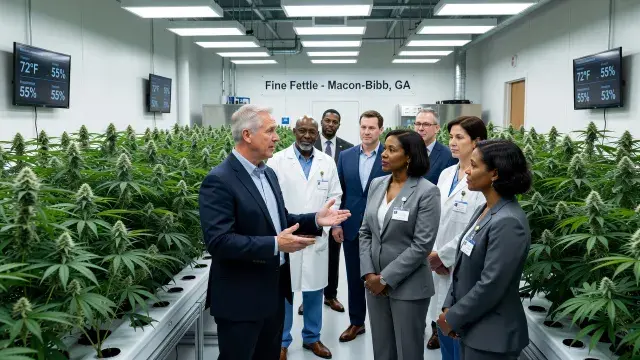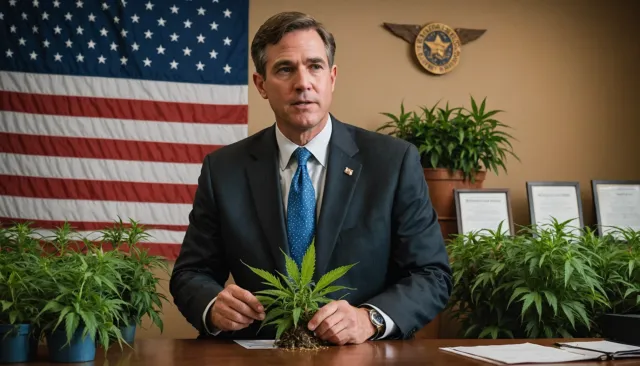
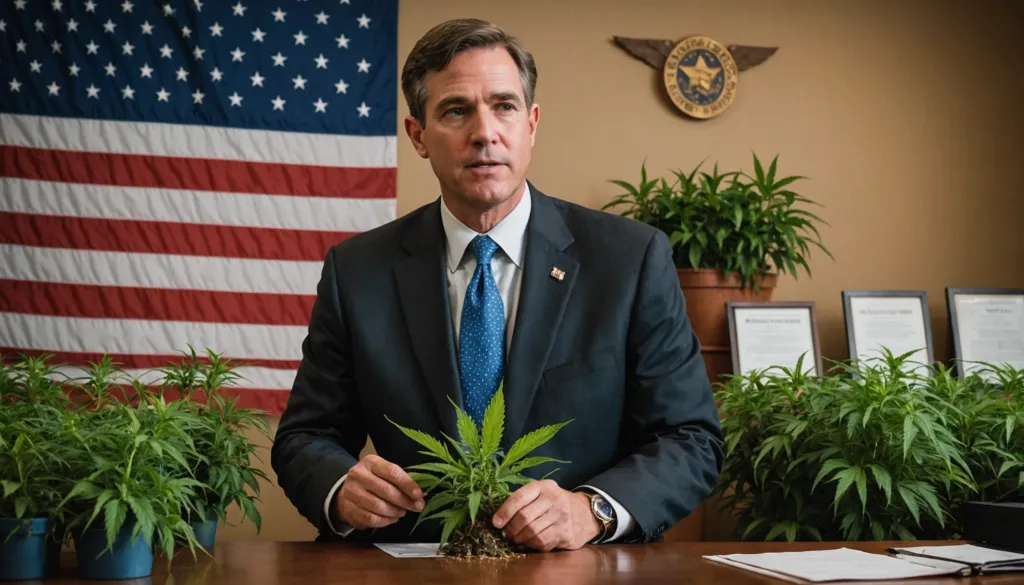
An Oklahoma gubernatorial runoff has turned into a case study in why regulators and bankers are supposed to stay on opposite sides of the counter. Attorney General Gentner Drummond, the Republican seeking his party's nomination for governor in Tuesday's runoff, chairs the parent company of Blue Sky Bank, an Osage County institution that has grown roughly sixfold in assets since Oklahoma legalized medical marijuana in 2018. That growth story is public record. What it means for an attorney general who also controls the state's prosecutorial machinery is the question voters are being asked to sit with days before they cast ballots.
Cannabis banking is a genuinely hard problem, and it is worth explaining why before assigning blame to anyone. Marijuana remains a Schedule I substance under federal law, at least until the rescheduling to Schedule III that the Justice Department moved on this year, so most federally chartered banks still avoid touching cannabis deposits at all. That leaves state-licensed growers, processors, and dispensaries stacking cash in safes, hiring armored couriers, or hunting for one of the few institutions willing to open a compliant account. Blue Sky Bank built a multi-state banking operation into that gap, advertising services from armored pickup to dedicated cannabis accounts across nearly 30 states. Operators in states with mature regulatory frameworks increasingly rely on specialized platforms and dedicated banking relationships to manage that risk; even outside Oklahoma, tools like cannabis business management software connecticut have become part of how licensed businesses document compliant cash handling and satisfy examiners. The infrastructure problem is real. The conflict-of-interest problem sitting on top of it is what this runoff has surfaced. cannabis business management software connecticut
What makes this more than an academic banking story is the reporting chain around it. Sources have described armored trucks moving cannabis cash across state lines, deposits allegedly structured to duck federal reporting thresholds, and money eventually landing in banks that feed into Blue Sky. None of that has been documented. No manifest, no route, no bank record has surfaced publicly. That absence of proof is exactly why an independent audit matters here, not less. Structuring cash deposits to avoid Bank Secrecy Act reporting requirements is a federal crime regardless of who owns the bank, and any institution active in cannabis banking is expected to maintain enhanced due diligence, currency transaction reports, and suspicious activity monitoring under FinCEN guidance. Drummond's campaign has one clean way to settle the question: open the books, put sworn testimony on the record, and let examiners rather than press releases determine whether Blue Sky Bank's growth matches ordinary compliant banking practice.
Why the Dual Role Matters for Regulators and Operators
Licensed cannabis operators already navigate a stack of state-level compliance obligations - seed-to-sale tracking, lab testing and COA verification, compliant packaging, excise tax remittance, and the crushing weight of Section 280E, which until this year's rescheduling forced cannabis businesses to pay federal income tax on gross revenue rather than net profit. Banking access sits at the center of nearly all of it, because a business that cannot open a normal account cannot easily pay vendors, process payroll, or document its own tax position cleanly. An attorney general who simultaneously chairs a bank profiting from that exact banking gap, while also deciding which cannabis operators get prosecuted as bad actors, creates a structural conflict that has nothing to do with whether any specific transaction was improper.
What an Audit Would Actually Resolve
An independent audit would not just address the unverified claims about cash structuring. It would clarify how much of Blue Sky Bank's cannabis-driven deposit growth Drummond's family financially benefits from, what the pending Schedule III reclassification does to the value of that book of business, and whether Paycheck Protection Program loans processed through his own bank for his own companies followed arm's-length underwriting. None of those questions require proving wrongdoing to matter. They require disclosure. For an industry still fighting for legitimacy at every level of finance, the standard has to be higher, not lower, when the person setting enforcement priorities is also the one profiting from the banking side of the ledger.