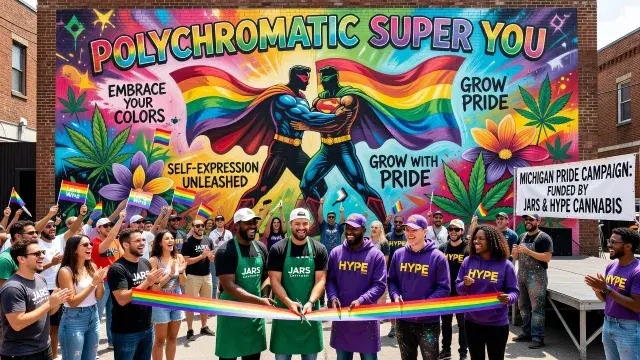
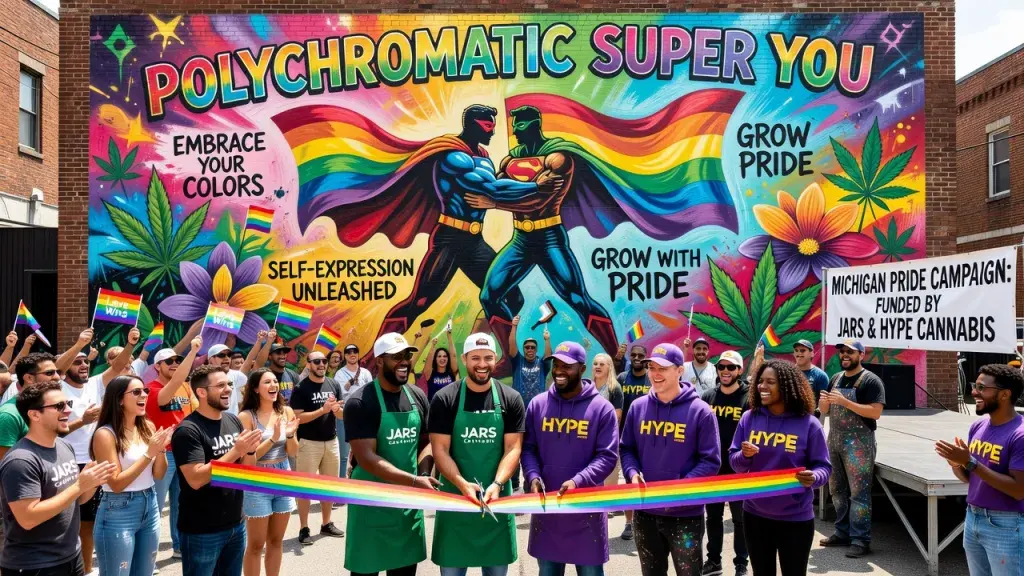
A ribbon-cutting ceremony in downtown Ferndale marked the debut of "Polychromatic Super You," a 40-by-25-foot mural by Michigan artist Joey Salamon, installed in the alley at 258 W. Nine Mile Rd. The piece was commissioned jointly by JARS Cannabis and HYPE Cannabis, two brands that have built a cross-promotional partnership around cannabis retail and community giving rather than around price wars or shelf-space competition.
The mural anchors the companies' Smoke with Pride campaign, which directs 10 percent of proceeds from HYPE product sold at JARS locations, plus all proceeds from a co-branded Smoke with Pride kit, to Detroit's Ruth Ellis Center, a support-services organization for at-risk LGBTQ+ youth. That kind of cause marketing is becoming a differentiator for operators in mature adult-use markets like Michigan, where dispensary density is high and brand loyalty is thin. Back-end systems still decide whether campaigns like this are financially sustainable - tracking donation percentages against actual SKU-level sales requires clean data pipelines, the same kind of infrastructure that platforms such as seed to sale erp software colorado are built to standardize across dispensary and processor operations in other adult-use states. seed to sale erp software colorado
Why Cause Marketing Carries Real Compliance Weight
Here's the catch with donation-tied promotions in cannabis: they still fall under the same advertising and marketing rules that govern any other retail claim. Michigan's regulatory framework requires that promotional materials avoid appeals to minors, misleading health claims, or language that could be read as encouraging excessive consumption. A public mural funded by two licensed retailers isn't just goodwill - it's a marketing asset, and marketing assets get scrutinized. Retailers running percentage-of-proceeds campaigns need accurate point-of-sale tagging to prove, if ever asked, that the donated percentage reflects actual transactions rather than a marketing estimate pulled from thin air.
What Multi-Brand Partnerships Signal for Operators
JARS and HYPE aren't vertically integrated under one license holder; they're separate companies coordinating a retail-and-brand relationship. That structure is common in Michigan's adult-use market, where wholesale relationships between retailers and product brands often extend into shared marketing budgets. For smaller operators watching this unfold, the takeaway isn't the mural itself - it's the operational discipline behind it. Tracking a promotional SKU across multiple store locations, reconciling donation totals, and keeping compliant packaging and labeling consistent across a co-branded kit all require inventory systems that talk to each other cleanly.
Public Art as Retail Placemaking, Not Just Branding
Municipalities have grown more comfortable with cannabis retailers sponsoring public art, in part because it reframes dispensary storefronts as neighborhood stakeholders rather than tenants operating under a lightly tolerated license. Ferndale's alley location, a QR code linking to donation resources, and a public unveiling event all suggest a deliberate move to position the mural as civic infrastructure rather than storefront signage. That distinction matters for local zoning boards and municipal licensing bodies, who often weigh community engagement when renewing or reviewing local cannabis retail permits.