Licensed cannabis dispensaries across the United States are facing mounting operational pressure as state regulators tighten compliance requirements, audit frequency increases, and the cost of doing business in adult-use markets continues to climb. The stakes are particularly high for multi-location operators trying to standardize back-office functions across jurisdictions that each carry their own reporting obligations, tax structures, and inventory tracking mandates. Getting this right is not optional - it is a licensing condition.
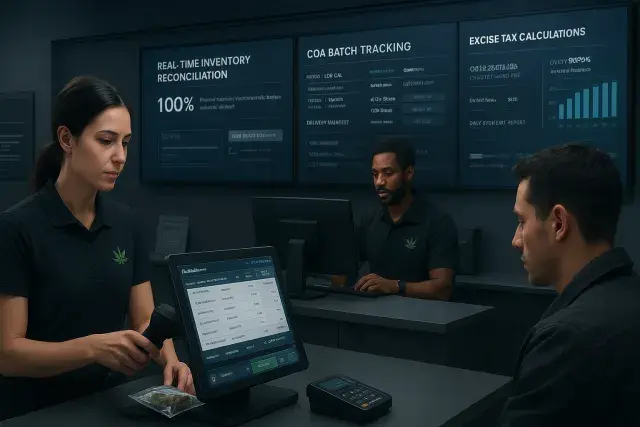
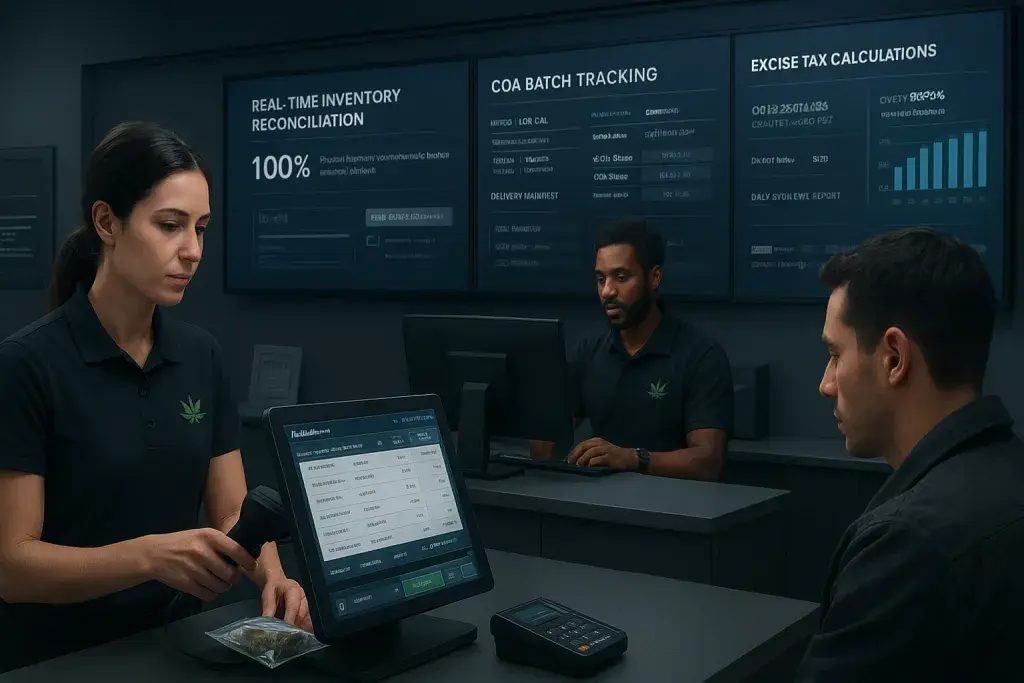
Point-of-sale infrastructure sits at the center of most of these compliance demands. Seed-to-sale tracking systems like METRC require that every transaction be logged, every product batch tied to a COA, and every transfer reconciled against a delivery manifest - in real time, with zero tolerance for discrepancies. Operators that rely on outdated or disconnected POS terminals routinely discover the gap between their internal inventory counts and their METRC-reported figures only when regulators come knocking. Tools built specifically for the regulated cannabis environment - such as IndicaOnline cannabis POS - are designed to close that gap by integrating compliance logging directly into the sales workflow, which matters considerably in markets like New Jersey where adult-use licensing conditions are still actively being enforced and scrutinized.
Here's the catch with general retail technology: software built for alcohol, convenience, or apparel retail does not map cleanly onto cannabis compliance requirements. SKU management in a dispensary is not just an inventory question - it touches product category restrictions, purchase limits, age verification, excise tax calculation, and in some states, real-time reporting to a state-run tracking system. A POS terminal that cannot speak directly to those requirements creates manual workarounds, and manual workarounds create audit risk.
Inventory Shrinkage and Compliance Logs - Where Operators Lose Ground
Inventory shrinkage in cannabis retail carries consequences that go well beyond what a traditional retailer would face. In a licensed dispensary, unexplained variance between physical stock and tracked inventory is not just a shrink problem - it can trigger a compliance investigation, a license hold, or in serious cases, an enforcement action. State cannabis regulators interpret unresolved discrepancies as potential diversion, which is about as serious a finding as a dispensary can face.
Operators running high-volume budrooms need tight SKU-level reconciliation happening on a daily basis, not monthly. That means the POS, the back-office inventory system, and the state tracking platform need to be pulling from the same data. In practice, though, many single-location operators - particularly in markets that opened recently - are still stitching together disconnected tools, running exports manually, and hoping the numbers align before their next state inspection. That approach does not scale, and it does not hold up under regulatory pressure.
Taxation Complexity Adds Another Layer of Operational Risk
Cannabis retail taxation is genuinely complicated. Most adult-use states layer a state excise tax on top of standard sales tax, and some municipalities add their own local cannabis tax on top of that. The result is a tax stack that can approach or exceed 30 percent of the retail price in certain jurisdictions. Under federal tax code Section 280E, licensed cannabis businesses operating in Schedule I states cannot deduct most ordinary business expenses the way a conventional retailer can - which means that even a modestly profitable dispensary faces an effective federal tax burden that would look punishing by any standard business comparison.
What's striking here is how many operators still treat taxation as a post-sale accounting function rather than a real-time operational variable. Excise tax must be calculated correctly at the point of sale, reflected accurately on the receipt, and reported to the state on schedule. POS systems that miscalculate tax - even by a rounding error applied across thousands of transactions - create both a financial exposure and a compliance filing problem. These are not hypothetical risks. They are documented failure points for dispensaries in markets with active tax enforcement programs.
What Sound Retail Infrastructure Actually Looks Like
The baseline for a compliant, professionally run dispensary operation in 2025 includes a few non-negotiables: a POS system integrated with state seed-to-sale tracking, daily inventory reconciliation, compliant packaging verification at intake, age verification at every transaction, and documented staff training on purchase limit rules. Cashless payment options - whether through PIN debit, ACH-based solutions, or cannabis-specific payment platforms - have also become standard in markets where banking access has improved, given that cash-only operations carry both security risk and compliance complexity.
Multi-state operators have an additional layer to manage: each state has its own tracking system, its own tax structure, and its own rules around wholesale pricing, product testing standards, and advertising restrictions. What passes compliance review in one state may not in another. That regulatory fragmentation is the defining operational challenge for any cannabis business trying to grow beyond a single license. The infrastructure decisions made at the store level - POS selection, compliance software, training protocols - either support that expansion or quietly work against it.
To put it plainly: the dispensaries that treat technology and compliance as a cost center to be minimized are the ones that tend to accumulate audit findings. The ones that treat operational infrastructure as a business foundation tend to scale more cleanly and hold their licenses with less friction.