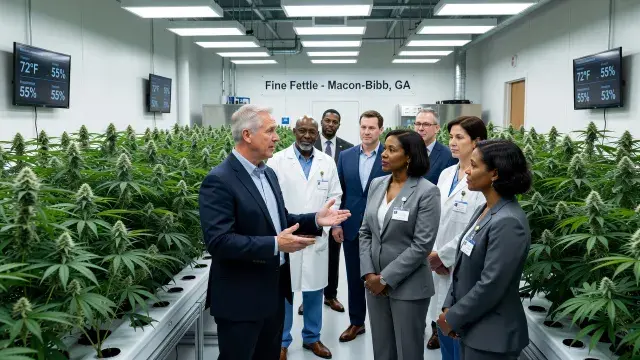

The signing of a federal order by Acting Attorney General Todd Blanche to move state-licensed medical cannabis from Schedule I to Schedule III of the Controlled Substances Act represents the most consequential shift in federal drug policy in decades - and its effects are already rippling through state legislatures, dispensary accounting departments, and compliance teams simultaneously. The order also reclassified FDA-approved marijuana products and, critically, opens a DEA registration pathway for state-licensed operators while prospectively eliminating the Section 280E tax disallowance for medical cannabis businesses. For operators who have spent years absorbing the punishing economics of 280E - unable to deduct ordinary business expenses like payroll, rent, and cost of goods sold - that last point alone changes the math on viability.
What 280E Relief Actually Means at the Register
To understand the weight of 280E elimination, consider what state-licensed dispensaries have been absorbing. Under IRS code 280E, cannabis businesses operating with Schedule I substances were barred from taking standard federal business deductions. Payroll. Rent. Marketing. Utilities. All of it was non-deductible. Effective tax rates for compliant, licensed operators regularly exceeded 60 to 70 percent of gross income - a structural disadvantage that no other retail category faces.
With the rescheduling order, state-licensed medical cannabis businesses gain access to the same federal deduction framework every other small business uses. The IRS and Treasury have signaled they will issue formal guidance. In practice, this means operators can begin restructuring their financial planning - though compliance professionals will rightly counsel caution until binding IRS guidance is published and the DEA hearing process resolves any residual ambiguity.
Here's the catch for multi-state operators: the relief applies specifically to medical cannabis, not to adult-use. In dual-program states, operators running vertically integrated licenses that serve both markets will need clean accounting separation between medical and adult-use revenue streams. POS systems, inventory management platforms, and seed-to-sale tracking software - METRC integrations in particular - will need to reflect that distinction clearly if businesses intend to defend deduction eligibility under audit.
State Policy Is Moving, But Not in a Straight Line
The federal rescheduling does not legally require any state to change its cannabis laws. Full stop. But the political environment it creates is a different matter. A YouGov/Economist poll from April 2026 found 84 percent of Americans support medical cannabis legalization - including 81 percent of Republicans. The primary resistance in conservative-leaning states has rarely been public opinion; it has been the political exposure of endorsing a federally illegal substance. Acting Attorney General Blanche framed the order explicitly as "delivering on President Trump's promise to expand Americans' access to medical treatment options." That framing matters to a Republican state legislator in a way that no prior rescheduling advocacy effort could replicate.
Georgia offers a concrete illustration. Governor Brian Kemp signed SB 220 - the "Putting Georgia's Patients First Act" - on May 12, 2026. The bill removed the previous 5% THC potency cap, replaced it with a 12,000-milligram possession limit, expanded qualifying conditions, and permitted vaporization for patients over 21. The bill had its own legislative momentum, but the timing suggests the federal backdrop provided meaningful political cover for Republican legislators who might otherwise have waited.
Texas, Iowa, and Tennessee - all states with highly restrictive existing frameworks - face comparable dynamics. Texas limits licensed operators to extremely low-THC products and a narrow list of qualifying conditions. Iowa caps patient possession at 4.5 grams of THC per 90-day period. Tennessee operates largely on a CBD-only framework. Advocates in each state can now point to federal acknowledgment of medical cannabis's accepted medical use as a rebuke to the argument that caution is required because the federal government views the plant as having no legitimate purpose.
States Without Programs Face Structural, Not Just Political, Obstacles
Approximately nine states still lack comprehensive medical cannabis programs. The rescheduling order provides some marginal assistance to advocacy efforts in each - but "marginal" is the operative word for several of them.
North Carolina's Compassionate Care Act (HB 1011) is active in the current legislature, which opened its 2026 session in April. Competitive pressure from neighboring Virginia and Georgia - both of which now have more functional programs - creates an economic urgency alongside the political shift. South Carolina's S 0053 faces cultural conservatism as its primary obstacle, though the Trump administration's explicit endorsement of medical cannabis access significantly weakens the "federal law conflict" argument that cautious legislators have used. Wisconsin passed a medical cannabis bill through the Senate Health Committee in February 2026 but stalled before a floor vote; legislative leadership, not the governor, remains the bottleneck there.
Idaho is its own situation entirely. While a medical cannabis initiative is gathering signatures for the November 2026 ballot, state legislators referred a constitutional amendment - HJR 4 - to that same ballot. If passed, it would strip voters of the ability to legalize prohibited substances via citizen initiative. That's not a political headwind. That's a structural foreclosure of the pathway itself. Kansas, Indiana, and Wyoming are, by most practical measures, unlikely to move near-term regardless of the federal environment.
Dual-Program States: Medical Programs May Gain a Real Competitive Edge
In states operating both medical and adult-use programs - Illinois, Colorado, Massachusetts, Michigan, and others - the rescheduling could accelerate a demand shift back toward medical. The mechanism is straightforward. Medical cannabis is now a federally recognized Schedule III substance. Adult-use cannabis remains Schedule I. That distinction creates asymmetric possibilities.
Health savings accounts and flexible spending accounts could theoretically treat physician-recommended medical cannabis as a reimbursable medical expense. Health insurers may eventually face pressure to address coverage. Neither outcome is imminent - but the regulatory architecture now permits the conversation in a way it did not before. More immediately, the 280E elimination for medical operators could allow those businesses to lower prices at the point of sale while maintaining healthier margins. Adult-use operators, still subject to 280E, cannot match that structural cost advantage.
Tax differentials sharpen the picture further. In Illinois, the adult-use excise tax can reach 34 percent or higher depending on THC content, while medical cannabis carries a substantially lower tax burden. If medical patients find that their recommended products are now cheaper, more accessible, and arguably more protected under federal law - and if medical cards become easier to obtain as qualifying condition lists expand in states like Georgia - the medical program could draw back consumers who previously opted for adult-use retail for convenience.
For dispensary operators in dual-program states, the operational implication is real: budroom staff will need to understand the distinction between medical and adult-use product access, pricing, and documentation, and POS configurations should reflect the different tax treatment accurately at the transaction level. Compliance logs for medical sales - already subject to separate tracking requirements in most states - will carry added significance if 280E audit exposure becomes a live issue.
The Federal Architecture Is Still Being Built
The DEA is scheduled to begin a hearing on June 29 regarding a more comprehensive move of marijuana to Schedule III. Both NORML and Smart Approaches to Marijuana have filed notices of intent to participate - NORML arguing Schedule III is an interim correction and that full descheduling is the appropriate outcome, SAM contending that rescheduling lacks scientific basis and prioritizes commercial interests over public health. The hearing process introduces genuine uncertainty about how stable this rescheduling framework will be over the next 12 to 24 months.
Elsewhere in the federal apparatus, the ATF has drafted an update to its firearms purchase form acknowledging the federally legal status of medical cannabis under rescheduling - prohibiting only recreational use. The Congressional Research Service has noted that certified patients possessing medical cannabis from state-licensed dispensaries now carry certain Schedule III protections. The Department of Transportation, however, has clarified that medical cannabis use remains no defense against a positive drug test for safety-sensitive workers. That caveat will matter to operators employing drivers, delivery personnel, or anyone subject to DOT oversight.
What's striking here is the degree to which different federal agencies are moving at different speeds with different conclusions about what rescheduling actually means for day-to-day operations. That is not a criticism - it reflects the genuine complexity of applying a new federal classification to an industry that grew up in a legal gray zone. Operators should expect 12 to 18 months of continued regulatory clarification across banking access, tax treatment, DEA registration logistics, and employment law before anything approaching settled federal guidance exists.
In the meantime, state-licensed medical cannabis businesses have the most to gain and the most to track. Getting ahead of the compliance and tax restructuring work - rather than waiting for final guidance - is the practical posture. The rules are changing. The direction is clearer than it has ever been. The fine print is still being written.