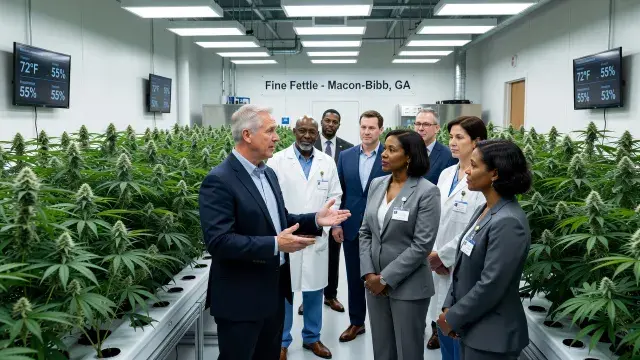

On April 22, the Department of Justice and the Drug Enforcement Administration formally moved marijuana from Schedule I to Schedule III under the Controlled Substances Act - a shift that carries immediate, concrete consequences for cannabis operators across the country. The most direct effect: Section 280E of the Internal Revenue Code, which had long prevented cannabis businesses from deducting ordinary business expenses, no longer applies to medical marijuana operations. For multi-state operators carrying heavy tax burdens, that's not a regulatory footnote. It's a structural change to the income statement.
What 280E Actually Cost the Industry
To understand why this matters at the operational level, it helps to remember what 280E actually did. Because cannabis remained a Schedule I substance - legally categorized alongside heroin, with no accepted medical use - cannabis businesses were denied the standard deductions available to virtually every other legal commercial enterprise. Operators couldn't deduct rent, payroll, marketing, or most overhead. They paid federal income tax on gross profit rather than net income, which meant effective tax rates that could reach 70% or higher in profitable quarters. That's not a minor compliance headache. For a dispensary chain running thin margins across multiple states, 280E was often the single largest drag on profitability.
The rescheduling to Schedule III changes that calculus. Medical cannabis operators can now treat their businesses the way any other retail operation would - deducting the costs of doing business before calculating federal tax liability. For large multi-state operators with hundreds of dispensaries, the savings compound quickly.
Trulieve and Curaleaf: Early Signals From the First Quarter
Two of the largest MSOs by dispensary count - Trulieve and Curaleaf - reported first-quarter results that reflect, at least partially, what life after 280E can look like. Trulieve, which operates more than 240 dispensaries and holds a commanding position in Florida's medical market with nearly 170 locations in that state alone, returned to profitability in the first quarter. The company reported $287 million in revenue and $2.4 million in net income, compared to a loss of $32.9 million in the same period a year earlier. Revenue was down modestly - 4% year over year - but improved margins tell the more important story. The tax drag that once consumed operating gains is beginning to lift.
Trulieve also filed amended federal returns for 2019, 2020, and 2021, claiming $143 million in federal refunds and $31 million in state refunds. Whether those refund claims hold - and whether 280E relief will be applied retroactively to pre-rescheduling tax years - remains an open legal question. That's a significant unknown for any operator considering similar filings.
Curaleaf, which operates 164 dispensaries across 15 states, reported $324 million in first-quarter revenue, up 4.5% year over year. More striking is the swing in net income: $69.8 million in profit against a loss of $60.3 million in the same quarter last year. That's a dramatic reversal, and while not all of it can be attributed solely to the 280E shift, the directional signal is clear. Tax structure matters enormously to dispensary economics, and operators that were treading water under the old regime are now operating with a meaningfully different cost profile.
Vertical Integration and the Florida Factor
Trulieve's concentration in Florida deserves more attention than it typically gets. Nearly 170 dispensaries in a single state sounds like geographic risk - and in some business contexts it would be. But Florida's medical market is large, and that density enables a degree of vertical integration that dispersed operators simply cannot replicate. When cultivation, processing, and retail distribution all operate within a tightly managed regional footprint, the logistics costs drop, compliance documentation is easier to standardize, and gross margins hold up better than they do for operators spreading thin across a dozen fragmented state markets.
Florida remains medical-only for now. But the infrastructure Trulieve has built - cultivation facilities, distribution networks, dispensary density - is precisely what an adult-use conversion would require at scale. If and when Florida opens to recreational sales, Trulieve's position in that market would be difficult to replicate quickly.
Curaleaf's International Bet and What the Hearings Mean Next
Curaleaf is making a different kind of argument to investors. While Trulieve has gone deep in one state, Curaleaf has gone wide - not just across U.S. states, but into Europe. Its international revenue reached $47 million in the first quarter, a 35% increase year over year, driven significantly by Germany's liberalization of adult-use cannabis. The company recently completed a full buyout of Four 20 Pharma, its German subsidiary, and projects a presence in 16 countries by 2027 as markets including Turkey, Spain, and France develop regulatory frameworks for cannabis sales.
That international exposure is a genuine differentiator. U.S. cannabis operators have historically been locked out of capital markets available to other industries - no major exchange listings, limited institutional investment, restricted banking access. A company with significant and growing international revenue has a different story to tell potential institutional investors than one whose entire business depends on the pace of U.S. federal reform.
Here's the catch, though. The rescheduling announced in April applies specifically to medical marijuana, and hearings scheduled to begin June 29 will determine whether all cannabis - including recreational - moves to Schedule III. If those hearings conclude favorably, the full elimination of 280E across all revenue streams could follow, potentially by late 2026. That would represent a second, larger wave of margin improvement for operators with significant adult-use exposure. But hearings have a way of taking longer than anticipated, and the regulatory calendar in cannabis has a long history of slippage. Operators building financial projections around a specific outcome date are taking on planning risk they should price carefully.
What's clear is that the direction of federal policy has shifted in a way that is material to dispensary economics, MSO valuation, and the longer-term feasibility of up-listing to major exchanges - which would, in turn, open the door to institutional capital at a scale the sector has never seen. The operational and financial structure of cannabis retail is changing. Slowly, unevenly, with legal uncertainty at every step. But it is changing.