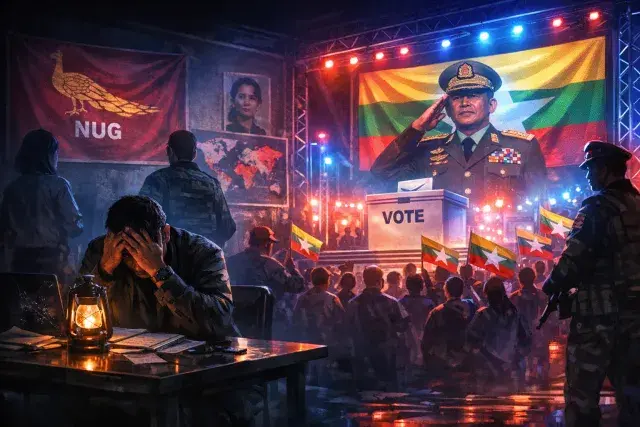
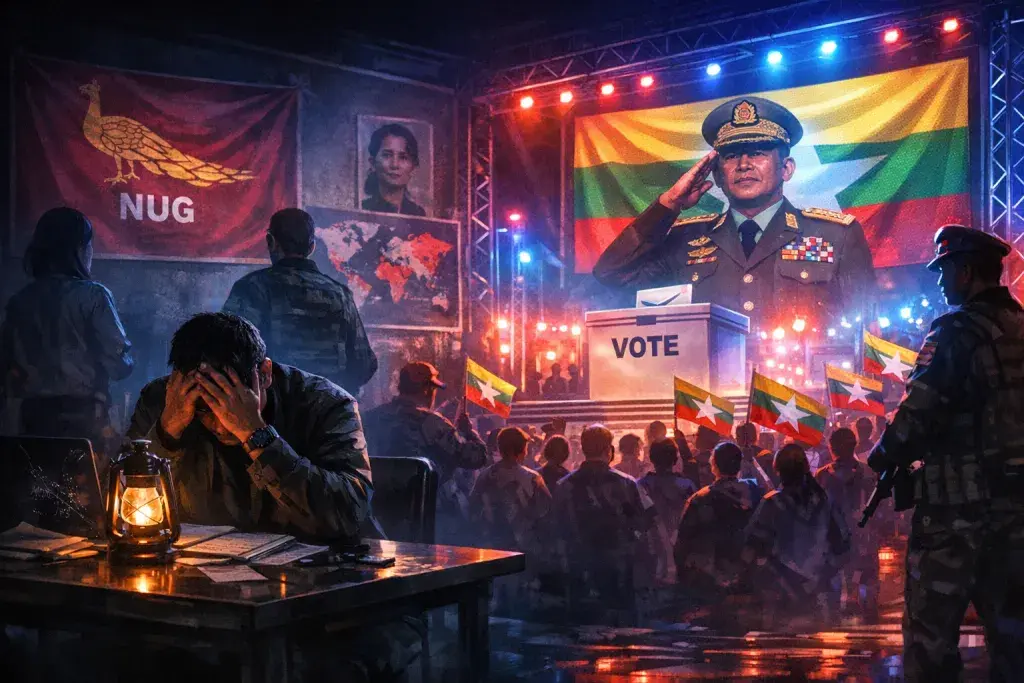
The National Unity Government, formed by Myanmar politicians and civic leaders after the military's 2021 coup, sought to serve as the nation's sole legitimate voice abroad. Five years on, this shadow administration struggles with irrelevance amid limited battlefield control and international inaction. As the junta prepares elections under its control, the pro-democracy group's ambitions appear increasingly out of reach.
Birth of a Shadow Government
Following the military's seizure of power on February 1, 2021, opponents to the junta established the National Unity Government of Myanmar. Leaders set up offices in Washington and London, alongside restive areas inside the country. They raised millions, formed ministries, and pledged to unite ethnic armies and rebel groups into a fighting force, positioning themselves as the true government in exile.
Persistent Failures and Fractured Resistance
Despite these efforts, the group has secured few major victories. It failed to counter global apathy toward the junta's crackdown, which has killed at least 7,700 people. Control over local rebel groups and ethnic armies remains incomplete, even as resistance forces have gained ground against the military, which holds about half the territory and dominates cities.
U Kyee Myint, an 80-year-old prominent human rights lawyer, described the shadow government as functioning more like a civil society organization than a revolutionary force. He criticized it for disconnecting from popular demands on the ground.
Junta's Grip Tightens Ahead of Polls
The military, which has dominated Myanmar for much of its post-colonial era, announced elections last year under Senior General Min Aung Hlaing's leadership. Opposition figures face imprisonment, political bans, or exile, rendering the vote a tightly controlled affair. This development underscores the National Unity Government's waning influence, as the junta entrenches its position without yielding ground to pro-democracy challengers.
Implications for Myanmar's Future
Myanmar's conflict highlights the challenges of exile-led resistance against entrenched militaries. The shadow government's diffuse structure limits its coordination with armed groups, perpetuating a fragmented opposition. Without unified international pressure or decisive battlefield wins, the junta's path to a nominal civilian facade risks entrenching authoritarian rule, prolonging violence and instability for millions.