
Missouri's cannabis regulators have concluded the state's licensed market is doing its job - meeting consumer demand without expansion. That finding comes from a statewide study released last week, one that regulators say will shape licensing decisions going forward. But the research couldn't settle a question that matters just as much to operators and investors watching this market: who actually owns these businesses, and how much of the industry sits in the hands of a few large players.
What the Study Found - and What It Couldn't
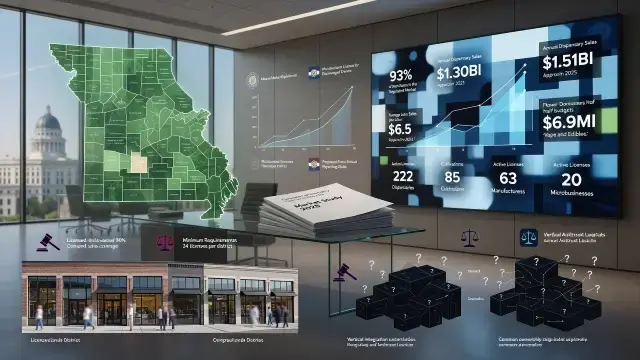
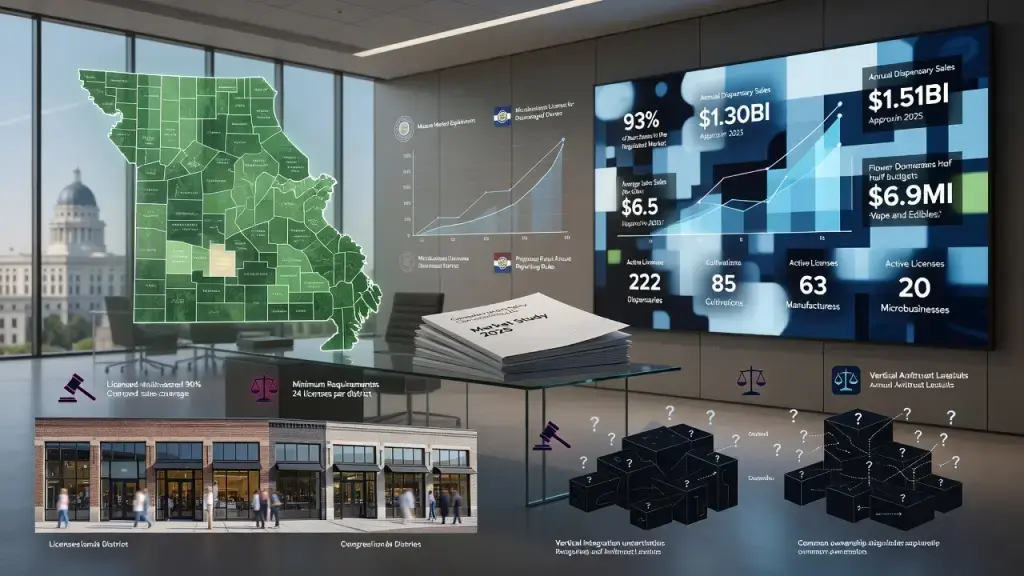
The analysis, conducted by Cannabis Public Policy Consulting LLC, looked at purchasing patterns, monthly consumer spending, and sales distribution across licensed dispensaries. The topline conclusion: no evidence of overconcentration based on how sales break down among facilities. Roughly 93% of cannabis purchases in Missouri now happen in the regulated market, with licensed dispensaries capturing more than 90% of sales in every congressional district. That's a meaningful data point for a state still working to pull consumers away from unregulated sources.
Here's the catch, though. Sales distribution is only half the picture. The researchers lacked usable ownership data - meaning they couldn't tell whether several dispensaries operating under separate licenses actually belong to the same parent company. In a market built on license caps and constitutional minimums, that's not a small gap. Vertical integration and common ownership can concentrate market power in ways that raw sales figures simply don't reveal.
Why Ownership Data Is the Harder Problem
Division Director Amy Moore acknowledged the limitation directly, saying the agency intends to fold ownership data into future market studies. That's easier said than done. Missouri already collects ownership information through its licensing process, but the report notes that data is "complex and subject to legal and confidentiality considerations" that limit how it can be used externally. Proposed rules filed this month would require licensees to submit annual reports detailing ownership percentages for each entity or individual - but those filings would still face the same confidentiality review as any other licensee submission, according to division spokeswoman Lisa Cox.
In practice, that means regulators may hold the information needed to assess ownership concentration without being able to publish or fully act on it. This comes at a pointed moment: at least two lawsuits have been filed alleging antitrust violations among Missouri cannabis companies. Whether those claims hold up legally is a separate matter, but they underscore why operators, investors, and policymakers alike want a clearer picture of who controls what.
Market Maturity, Steady Economics
The numbers suggest a market settling into equilibrium rather than scrambling for footing. Annual dispensary sales climbed from about $1.30 billion in 2023 to $1.51 billion in 2025, while active dispensary licenses rose from 201 to 220 over the same stretch. Average sales per store held fairly steady - between $6.5 million and $6.9 million annually - which tells you demand grew roughly in step with new store openings rather than getting diluted across too many doors. Flower still dominates consumer spending, taking up about half of monthly cannabis budgets, with vape products and edibles trailing behind.
The report's recommendation is straightforward: stop focusing on expanding who can buy and start focusing on keeping the market competitive and efficient. Missouri's constitution sets minimums - at least 24 dispensary licenses per congressional district, 144 total microbusiness licenses aimed at disadvantaged business owners - while leaving room for regulators to add more if demand requires it. Right now, the state has approved 222 dispensary licenses, 85 cultivation licenses, 63 manufacturing licenses, and 20 operating microbusinesses, per July figures cited in the report.
What This Means for Operators and Regulators
For existing license holders, a market regulators describe as "mature" and "competitive" is reassuring - it suggests less near-term risk of oversaturation diluting wholesale pricing or compressing margins further. For prospective entrants and social equity applicants still waiting on microbusiness licenses, it's a more mixed signal: the door to rapid expansion looks largely closed unless demand shifts. And for compliance teams, the ownership-reporting rule now moving through the regulatory pipeline deserves attention well before it's finalized, since annual disclosure requirements tend to arrive with real operational and legal weight attached.
Moore said the division will keep monitoring the market and revisit the question of further study as the industry evolves, particularly as more microbusiness licenses roll out. Fair enough - but the real test will be whether Missouri can turn its existing ownership data into something usable without running into the same confidentiality wall twice.


